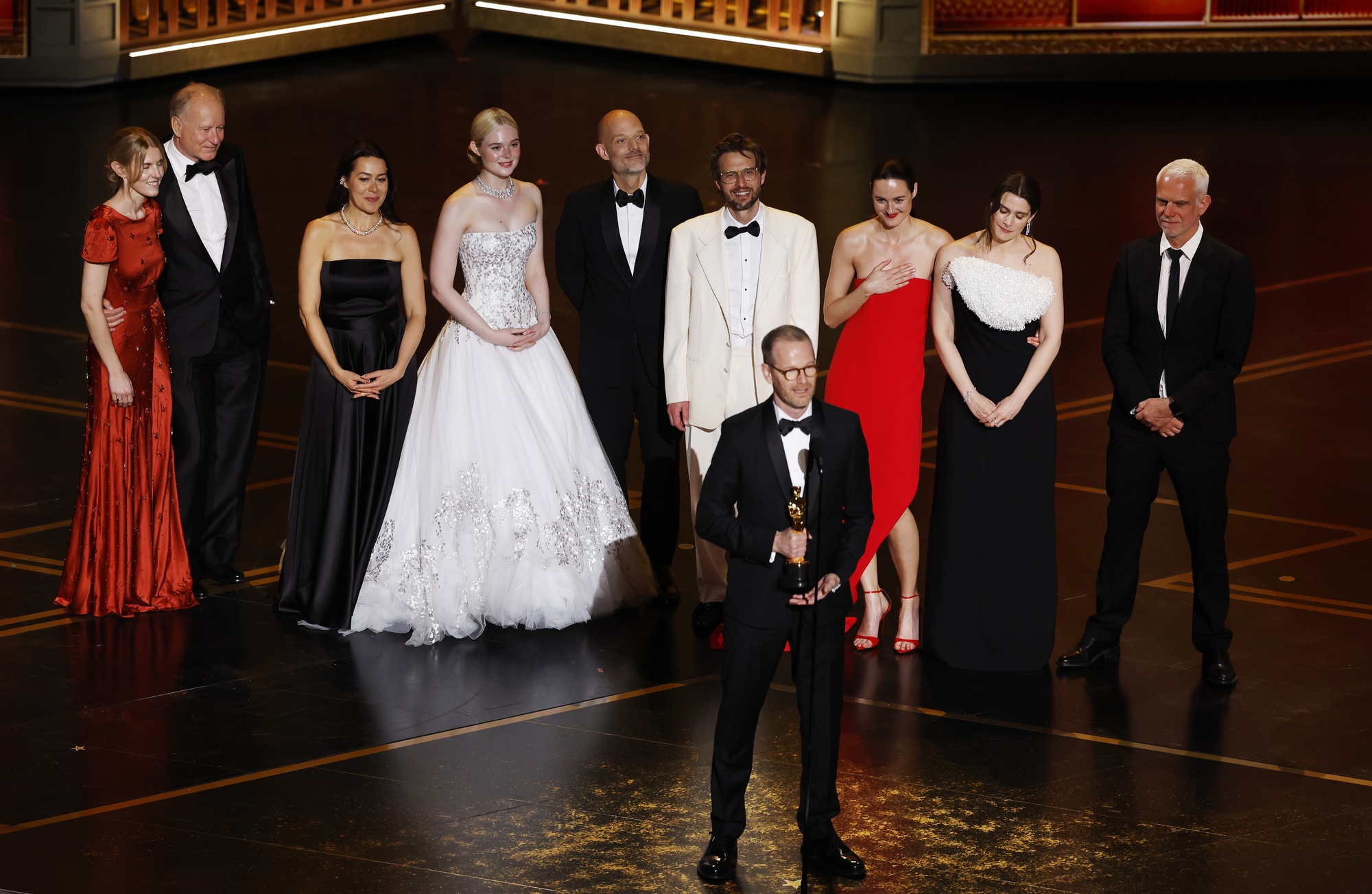
The 2025 Academy Awards ceremony delivered unexpected outcomes and emotionally charged moments that resonated far beyond Hollywood. In a year marked by ongoing global conflicts and their reflection in documentary filmmaking, the prestigious Oscar statuette went to a film about Russian subjects, while Ukrainian documentaries that had garnered significant attention throughout the awards season were notably absent from the final nominees list. The ceremony also featured discussions about humanitarian efforts, with actor Sean Penn reportedly considering another journey to war-torn Ukraine.
Ukrainian documentary films “2000 Meters to Andriivka” and “I Died in Irpen” had been widely anticipated to receive recognition at this year’s Academy Awards. Both films offered powerful testimonies about the devastating impact of Russia’s full-scale invasion on Ukrainian civilians and soldiers. However, neither production made it to the final list of Oscar nominees for 2025, leaving many supporters and film critics questioning the selection process and the criteria used by Academy voters when evaluating war documentaries.
The Documentary Landscape and International Recognition
The documentary film category has increasingly become a platform for highlighting global conflicts and humanitarian crises. The Academy of Motion Picture Arts and Sciences has historically recognized films that shed light on pressing international issues, from environmental disasters to human rights violations. The selection process involves thousands of Academy members who vote on submissions from around the world, making it a highly competitive and sometimes unpredictable arena. This year’s outcome has sparked renewed debate about how the Academy evaluates films dealing with ongoing conflicts, particularly when political sensitivities may influence voting patterns.
The Ukrainian film industry has shown remarkable resilience despite the ongoing war. Filmmakers continue to document the conflict, often at great personal risk, creating archives of testimony that serve both as historical records and as calls for international attention. “2000 Meters to Andriivka” followed Ukrainian soldiers during a particularly dangerous military operation, while “I Died in Irpen” captured the tragic stories of civilians caught in the early days of the Russian invasion. Both films received acclaim at international film festivals throughout 2024, building expectations for Oscar recognition that ultimately did not materialize.
Sean Penn’s Continued Advocacy for Ukraine
Actor and filmmaker Sean Penn has been one of Hollywood’s most vocal advocates for Ukraine since Russia’s full-scale invasion began in February 2022. Penn was actually in Kyiv filming a documentary when the invasion started and has made multiple trips to the country since then. His organization, CORE (Community Organized Relief Effort), has been actively providing humanitarian assistance to Ukrainian refugees and displaced persons. Reports suggesting Penn might make another trip to Ukraine during the awards season highlight the continued intersection of Hollywood activism and international humanitarian efforts.
Penn’s involvement with Ukraine extends beyond mere celebrity advocacy. He has met with President Volodymyr Zelenskyy on several occasions and has used his platform to call for increased Western support for Ukraine’s defense. His documentary about the early days of the invasion, “Superpower,” premiered in 2023 and offered an intimate look at Zelenskyy’s transformation from comedian to wartime leader. The actor has consistently argued that supporting Ukraine is a moral imperative for democratic nations, positioning himself as one of the most politically engaged figures in contemporary Hollywood.
The Broader Impact of Cinema in Wartime
The Academy Awards have long served as more than just an entertainment industry celebration. Throughout history, Oscar ceremonies have reflected and sometimes influenced public discourse on major global events. From Charlie Chaplin’s “The Great Dictator” during World War II to more recent documentaries about conflicts in Syria and Afghanistan, cinema has played a crucial role in shaping international awareness of war and its human cost. The inclusion or exclusion of films about current conflicts inevitably carries political weight, whether intended or not by the Academy.
For Ukrainian filmmakers and their supporters, the absence of their documentaries from this year’s nominees represents not just a professional disappointment but a missed opportunity for amplifying their message on one of the world’s largest cultural stages. The Academy Awards ceremony reaches hundreds of millions of viewers globally, and a nominated or winning film about Ukraine could have brought renewed attention to a conflict that some observers fear is fading from international headlines. Despite this setback, Ukrainian cinema continues to produce powerful work that finds audiences through film festivals, streaming platforms, and alternative distribution channels, ensuring that these stories reach viewers who seek them out.
Expert Opinion: The Academy’s documentary selections increasingly reflect a complex balancing act between artistic merit and geopolitical sensitivity, with voting members sometimes appearing hesitant to engage with films about active conflicts involving major world powers. As the war in Ukraine enters its fourth year, filmmakers face the challenge of maintaining international attention through cinema while competing against natural audience fatigue. The coming years will likely see continued tension between Hollywood’s proclaimed values of free expression and the practical realities of navigating an increasingly polarized global media landscape.