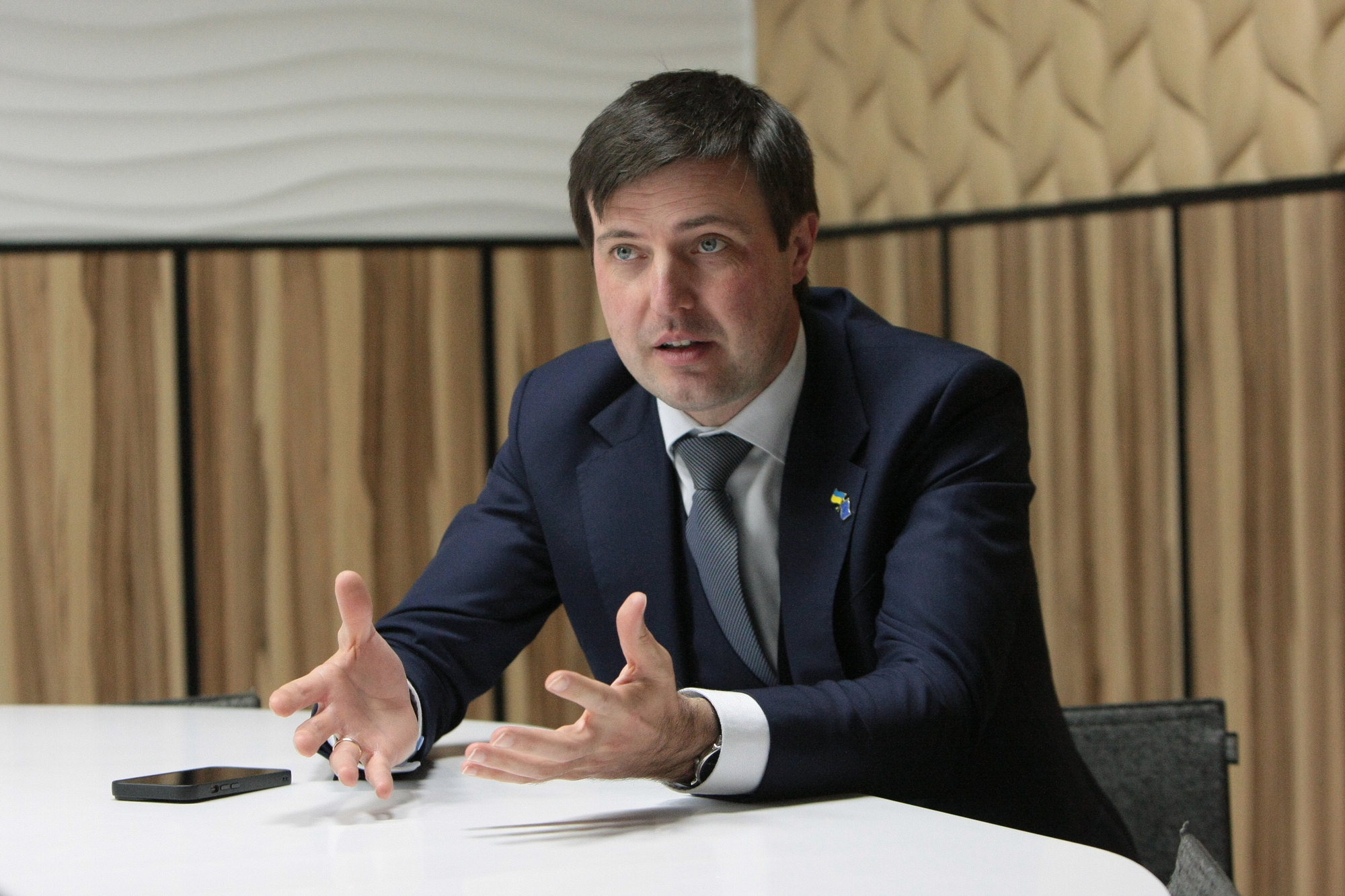

Alexander Komarov, CEO of Kyivstar, Ukraine’s largest mobile operator, has provided a candid assessment of the company’s current challenges and future strategies in a recent interview. The telecom giant is navigating a complex landscape marked by declining subscriber numbers, rising operational costs, and the ongoing pressures of wartime operations. Despite these headwinds, Komarov outlined an ambitious vision that includes strategic acquisitions, preparations for 5G deployment, and a groundbreaking initiative to develop a Ukrainian artificial intelligence model.
Kyivstar, which serves millions of Ukrainians and has been a cornerstone of the country’s telecommunications infrastructure for decades, finds itself at a critical juncture. The company has experienced a noticeable reduction in its subscriber base, a trend that reflects both the demographic shifts caused by the war and increased competition in the Ukrainian telecom market. Since Russia’s full-scale invasion in February 2022, millions of Ukrainians have been displaced both internally and abroad, directly impacting the customer bases of all major telecom operators in the country.
Subscriber Decline and Rising Operational Costs
The reduction in Kyivstar’s subscriber numbers represents one of the most significant challenges facing the company. Estimates suggest that between 6 and 8 million Ukrainians have relocated abroad since the war began, with many either canceling their Ukrainian mobile subscriptions or maintaining them only minimally. Additionally, the destruction of infrastructure in occupied and frontline territories has made it impossible to serve customers in certain regions. Komarov acknowledged that while the company is working to retain existing customers and attract new ones, the overall market has contracted considerably.
Meanwhile, tariff increases have become unavoidable as the company grapples with dramatically higher operational costs. Energy prices have surged, and the constant need to repair damaged infrastructure requires substantial investment. Kyivstar reportedly spent significant resources rebuilding networks destroyed or damaged by Russian attacks, including the massive cyberattack in December 2023 that temporarily crippled the company’s services across the entire country. That incident, attributed to Russian hackers, highlighted the vulnerability of critical telecommunications infrastructure during wartime and prompted major investments in cybersecurity.
Strategic Acquisitions and Market Expansion
Despite the challenging environment, Kyivstar continues to pursue growth through strategic acquisitions. The company has been actively expanding its portfolio of services beyond traditional mobile and internet connectivity. These acquisitions reflect a broader industry trend toward convergence, where telecom operators seek to become comprehensive digital service providers rather than simple connectivity vendors. Komarov emphasized that diversification is essential for long-term sustainability, particularly in a market where traditional revenue streams are under pressure.
Kyivstar’s parent company, VEON, has maintained its commitment to the Ukrainian market despite the obvious risks. This support has enabled Kyivstar to continue investing in network improvements and new services even as other international companies have pulled back from Ukraine. The company remains the market leader, but faces stiff competition from Vodafone Ukraine and Lifecell, both of which are also fighting for market share in a shrinking customer pool.
5G Prospects and Ukraine’s AI Ambitions
Looking toward the future, Komarov discussed the prospects for 5G deployment in Ukraine. While the technology represents the next frontier in mobile connectivity, offering dramatically faster speeds and lower latency, its rollout faces significant obstacles. The government has yet to allocate the necessary spectrum, and the ongoing war makes large-scale infrastructure investment particularly risky. Nevertheless, Kyivstar is positioning itself to move quickly once conditions allow, recognizing that 5G will be essential for Ukraine’s post-war economic recovery and digital transformation.
Perhaps most intriguingly, Komarov outlined Kyivstar’s vision for developing a Ukrainian artificial intelligence model. This initiative reflects growing recognition that AI capabilities are becoming critical infrastructure, similar to telecommunications networks themselves. A domestically developed AI model could serve Ukrainian businesses, government agencies, and citizens while ensuring that sensitive data remains within the country. Such a project would also reduce dependence on foreign AI providers and potentially establish Ukraine as a regional technology leader. The initiative aligns with the Ukrainian government’s broader push to digitize public services and leverage technology for national resilience.
Expert Opinion: Kyivstar’s situation reflects the broader paradox facing Ukrainian businesses: the need to simultaneously manage wartime survival and prepare for post-war growth. The company’s strategic investments in diversification, 5G readiness, and AI development suggest confidence in Ukraine’s future despite current difficulties. Industry analysts expect that telecommunications operators who maintain infrastructure investments during the conflict will be best positioned to capture the significant reconstruction-related demand that will emerge when peace returns.